

Amy Slaton QUITS 1000-Lb Sisters Forever – Fans Left Heartbroken!
## The Unseen Echo: Amy Sllayton’s Quiet Exit From the Spotlight
For years, the name Amy Sllayton was synonymous with resilience. She was the unwavering anchor in a turbulent sea of manufactured drama, the woman who could stare down any challenge with a steely gaze and a wry smile, broadcast to millions. Her journey, meticulously documented by the ever-present lenses of “The Sllayton Saga” (the unofficial title bestowed by legions of devoted viewers), transcended mere entertainment. It became a narrative of grit, a testament to the human spirit’s ability to endure, and for many, a source of inspiration. But like the fleeting glow of a fading ember, her time in the unfiltered glare of reality television ended not with a bang, but with a profound, almost deafening silence.
The moment, as described by those closest to the production, was not marked by the fireworks and pronouncements that typically herald the conclusion of an era. There were no tearful farewells staged for maximum emotional impact, no carefully orchestrated confrontations designed to leave audiences reeling. Instead, it was an intimate, almost clandestine unveiling of the profound exhaustion that had been subtly simmering beneath the surface of Sllayton’s indomitable persona. Imagine the scene: the last of the crew, their equipment packed and the echo of their footsteps fading into the night. The house, once a buzzing hive of activity, a landscape of controlled chaos orchestrated for the cameras, finally succumbed to stillness. Children, the unwitting co-stars and the heart of Sllayton’s off-screen world, were finally tucked away, their innocent dreams a stark contrast to the demanding reality of their mother’s public life. Toys, remnants of laughter and fleeting moments of normalcy, lay scattered like forgotten dreams across the floor. The tell-tale mic packs, the ever-present appendages that had become extensions of her very being, were gone. The carefully applied makeup, the mask of composure, had been wiped away, revealing the unvarnished truth etched in the lines of fatigue around her eyes.
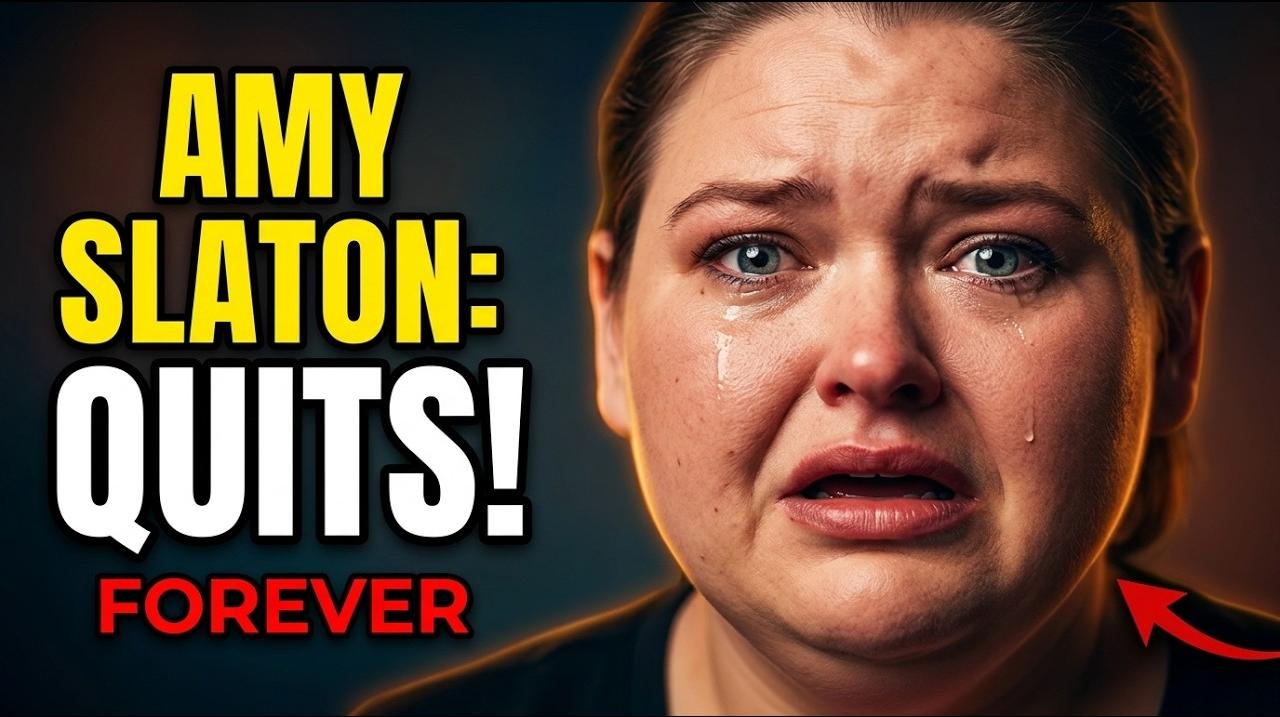
And then, there was Amy. Seated alone, the ambient hum of the house settling around her like a shroud. Before her, a solitary cup of coffee, long gone cold, a silent metaphor for the warmth that had been steadily leached away by years of relentless scrutiny. The cameras, those tireless sentinels of her every breath, her every sigh, her every triumph and every tear, were finally dormant. For the first time in what felt like an eternity, Amy Sllayton was simply Amy. Unseen. Unrecorded. Unburdened, perhaps, by the perpetual gaze of a watching world, but undeniably marked by its weight.
This quiet departure speaks volumes about the insidious nature of prolonged exposure to the reality TV machine. While “The Sllayton Saga” was often celebrated for its authenticity, for showcasing a woman grappling with the realities of motherhood, ambition, and societal expectations, the relentless pursuit of content eventually chipped away at the very foundations of that authenticity. Sllayton, initially lauded for her “realness,” became a prisoner of her own portrayal. Every moment of vulnerability, every flicker of doubt, every personal struggle was amplified, dissected, and repackaged as compelling television. The line between her private life and the public spectacle blurred, leaving her perpetually performing, even when the cameras were ostensibly off.
Her interactions with her children, often the most heartwarming and genuine segments of the show, were also fraught with the unspoken pressure of capturing “golden moments.” The playful sibling squabbles, the tender bedtime stories, the heartfelt confessions – while seemingly organic, were always under the specter of potential broadcast. This constant awareness, this subtle self-censorship, must have taken an immense toll. For Sllayton, the ability to simply *be* a mother, to experience the unscripted joys and frustrations of parenting without the meta-narrative of a television show, likely became an increasingly distant luxury.

The “impossible challenges” that defined her on-screen persona were not just physical feats or strategic maneuvers within the show’s fabricated competitions. They were also the daily, relentless challenges of maintaining a semblance of normalcy in an abnormal environment. The emotional labor of appearing unfazed, of projecting strength when the personal reserves were depleted, of navigating the complex interpersonal dynamics with other cast members who were, in many ways, her direct rivals for screen time and viewer attention – these were the true, unseen battles.
The impact of her exit, though devoid of external drama, resonates deeply within the fabric of the reality television landscape. It serves as a stark reminder of the human cost of this genre. For viewers who had invested years in Sllayton’s narrative, her quiet departure is a poignant loss. It’s the feeling of a familiar friend suddenly disappearing from your life without a word, leaving behind a void filled with unanswered questions and a lingering sense of melancholy. It prompts introspection: Were we, as an audience, complicit in her exhaustion? Did our insatiable appetite for her story contribute to the very weight she was trying to bear?
Amy Sllayton’s story is a microcosm of a larger phenomenon. The glittering allure of reality television often masks a more somber reality: the relentless demands placed upon its stars, the erosion of privacy, and the psychological toll of perpetual exposure. Her silent exit is a powerful testament to the fact that even the most resilient individuals have their breaking points. It is a quiet but potent elegy to the era of her on-screen presence, a moment that forces us to look beyond the dazzling facade and acknowledge the unseen echoes of human endurance, and ultimately, the profound need for a quiet space to simply be. The cameras may have stopped rolling, but the story of Amy Sllayton, the woman behind the persona, continues to unfold, now in the hushed and private theater of her own life.