
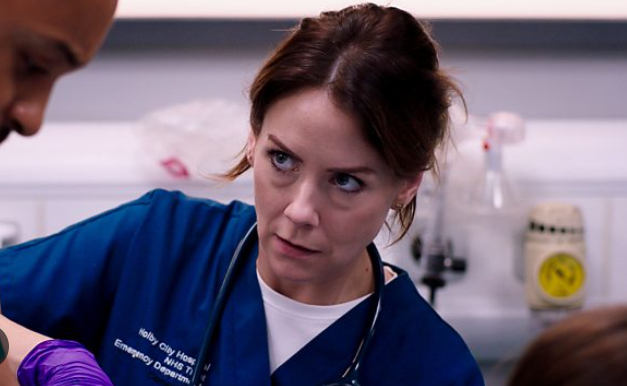
Doctor Finds Signs Of Abuse In Young Soldier | Lethal Legacy | Casualty
**Holby City Hospital has once again been plunged into the heart of a harrowing medical emergency, but this time, the trauma extends far beyond the battlefield. In a gripping new storyline titled “Lethal Legacy,” viewers of the long-running medical drama “Casualty” were left stunned as a dedicated HEMS doctor unearthed chilling signs of potential abuse hidden beneath the visible injuries of a young soldier.**
The episode, which has already sparked intense online discussion and debate, centered on the arrival of a group of soldiers at Holby’s Emergency Department. The chaos of their transport, shrouded in the darkness of a pre-dawn operation, immediately set a tone of urgency and disquiet. As the medical team, led by the ever-calm but intensely focused HEMS doctor Flynn, scrambled to assess the incoming casualties, the sheer gravity of their situation became apparent.
“They’re finally in,” a weary voice echoes through the control room, a testament to the arduous journey these servicemen have endured. The immediate focus shifts to the critical condition of Private Dixon, whose initial attempts at communication quickly fade, leaving the team with a palpable sense of dread. Equally concerning is the complete silence from Private Wickham, his whereabouts and condition an agonizing unknown.
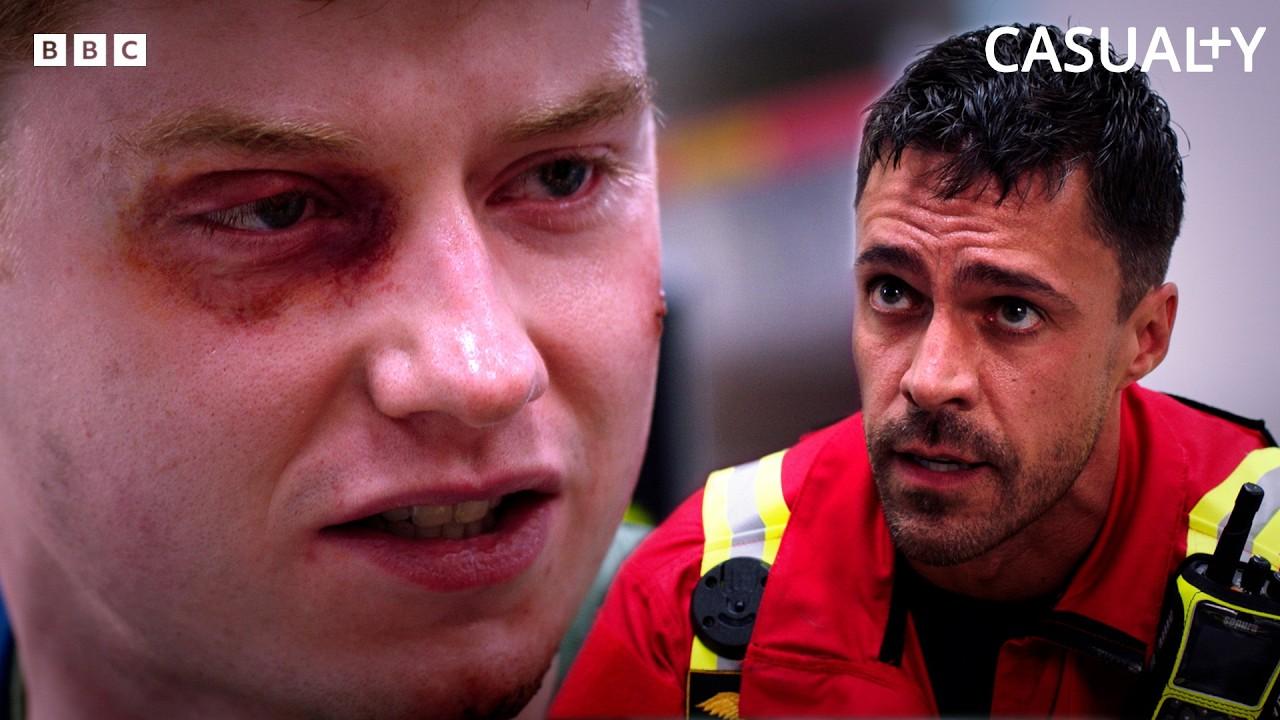
Amidst this tense atmosphere, a familiar face emerges – critical care paramedic Ian, who recognizes Dr. Flynn from a previous ED encounter. This brief moment of personal connection serves as a fleeting anchor in the storm of escalating medical crises. The dialogue, “Yeah, I know. All right, you were the kid in the ED with Connor, right?” highlights the established relationships and the interconnectedness of the Holby staff, reminding us that these professionals are not just faces on a screen but individuals with their own histories and bonds.
The primary focus quickly shifts to the physical assessment of one of the soldiers, whose dialogue reveals a painful shoulder injury. “It’s my shoulder,” he groans, his voice strained. The initial diagnosis, a dislocated shoulder, is delivered with the practiced efficiency of medical professionals. The soldier, attempting to downplay his pain, attributes the injury to a fall, a common hazard in their line of work. “Bad sprain. Must have broken a fall. You’re going lucky,” he insists, a hint of stoicism in his voice. However, the phrase “You’re going lucky” carries a double meaning, hinting at the potential for far worse outcomes.
But it is Dr. Flynn, with his keen observational skills honed by countless life-or-death situations, who begins to notice anomalies that transcend a simple battlefield injury. As the medical team works diligently to stabilize the soldier and prepare him for further examination, their actions are precise and professional. “We’re going to look you over and get you out of here, okay?” Dr. Flynn reassures the soldier, his tone gentle but firm. The urgent command, “Go Go Go to Kevin first,” reveals the critical triage process underway, prioritizing immediate life-saving interventions.

The drama intensifies as the medical team begins a more thorough examination of another soldier, identified as Murray. The terse exchange, “Murray, you are covered in bruising. No copy. Over,” delivered by a medical professional to an unseen colleague, signals a deeply disturbing discovery. The repeated, almost clinical description of extensive bruising paints a grim picture, far removed from the expected injuries of combat. The immediate follow-up question, “How is Private Dixon? Over,” underscores the constant flow of critical information within the ED, a testament to the high-stakes environment. The response, “Private Dixon is conscious,” offers a sliver of relief, but the overarching sense of unease remains.
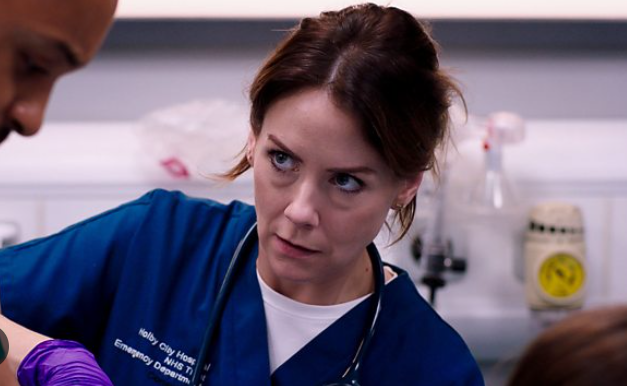
The true shock, however, lies in the meticulous work of Dr. Flynn. As he continues his examination, his attention is drawn to the soldiers’ bodies, not just for the obvious signs of trauma, but for the subtle indicators of something far more sinister. The dialogue, “Control that arm, okay? I want to look at your chest,” reveals his methodical approach to diagnosis. It is within this focused assessment that Dr. Flynn uncovers a pattern of bruising that is inconsistent with standard battlefield injuries. The patterns, the locations, the sheer extent of the contusions – they begin to paint a narrative that points away from the chaos of war and towards deliberate, sustained violence.
This revelation is a pivotal moment in “Lethal Legacy,” transforming the episode from a standard “Casualty” emergency into a profound exploration of the hidden wounds that can afflict individuals even after they have escaped physical conflict. Dr. Flynn, a character known for his dedication and sharp intellect, finds himself grappling with a moral and diagnostic dilemma. The visible injuries might suggest a skirmish gone wrong, but the tell-tale marks on the soldiers’ bodies whisper a much darker story.
The implications of Dr. Flynn’s discovery are immense. The narrative forces viewers to question the realities of military life, not just the inherent dangers of combat, but also the potential for interpersonal abuse within the ranks. The episode expertly builds suspense, allowing the audience to piece together the clues alongside Dr. Flynn, creating a shared sense of anxiety and anticipation. Is this an isolated incident, or a systemic issue? Who is responsible? These are the questions that hang heavy in the air, leaving the audience on the edge of their seats.
The character dynamics within the ED are also brought to the forefront. The unwavering support and professionalism of the Holby staff, even in the face of such disturbing revelations, are a testament to their dedication. Their shared commitment to patient care transcends the immediate crisis, pushing them to seek the truth, no matter how uncomfortable it may be. The episode highlights the often-unseen battles fought by medical professionals, not just against illness and injury, but against the complex and often painful realities of human experience.
“Lethal Legacy” is more than just a medical drama; it’s a powerful statement on the enduring impact of trauma and the courage required to confront it. The episode’s title itself suggests a cyclical nature of harm, hinting that the legacy of violence, whether inflicted on the battlefield or within the confines of a military unit, can have devastating and long-lasting consequences. Dr. Flynn’s discovery is not just a medical diagnosis; it’s a wake-up call, forcing the characters and the audience to confront the uncomfortable truths that can lie hidden beneath the surface, even among those who serve and protect. The “Casualty” writers have once again delivered a storyline that is both medically accurate and emotionally resonant, leaving a lasting impression and undoubtedly sparking crucial conversations about the unseen struggles faced by our servicemen and women. The impact of these events on the characters, both physically and psychologically, is sure to be explored in future episodes, promising further dramatic twists and turns in the “Lethal Legacy” saga.