
Britt was not Huntington, Cassius delivered a shocking report | General Hospital Spoilers
## Britt Westbourne: A Shadow Lifted, But the Echoes of Doubt Remain | General Hospital Spoilers
Port Charles has always been a crucible of drama, a place where secrets fester and emotional storms rage. But recently, the emotional tempest has been centered squarely on the formidable Dr. Britt Westbourne. For months, viewers have been captivated, and more importantly, deeply empathetic, as Britt has grappled with a diagnosis that threatened to shatter her world: Huntington’s disease. Now, as a shocking report from Cassius delivers a breathtaking twist, the very foundation of Britt’s perceived fate has been irrevocably altered.
The journey of Britt Westbourne has been a masterclass in vulnerability cloaked in defiance. Known for her sharp wit, her often prickly exterior, and her unwavering intelligence, Britt has navigated the treacherous waters of Port Charles with a strategic cunning. Yet, beneath the carefully constructed facade, a profound fear began to manifest. The early symptoms, insidious and unsettling, started to chip away at her resolve. The subtle tremors in her hands, the fleeting moments of disorientation, and the palpable fear in her expressive eyes spoke volumes. Audiences witnessed her silent battles, the private anguish as she confronted the possibility of a future robbed of her cognitive abilities and her cherished independence. It was a harrowing descent, and the collective heart of Port Charles, and its devoted viewers, ached with sympathy for the brilliant doctor facing such a devastating prognosis.
The specter of Huntington’s disease is a particularly cruel adversary. It’s a genetic disorder that relentlessly deteriorates nerve cells in the brain, impacting movement, cognition, and psychiatric state. For someone like Britt, whose identity is so intrinsically linked to her intellect and her ability to navigate complex medical scenarios, the thought of losing that was a profound tragedy. The weight of this impending doom hung over her like a suffocating storm cloud, threatening to extinguish the very essence of who she was. We saw her struggle with the implications, the quiet desperation as she contemplated a future where her sharp mind could be compromised, her agile hands could falter, and her very autonomy could be stripped away. The emotional toll was immense, and the anticipation of what was to come was a constant source of anxiety for those who have come to admire her resilience.
Her relationships were undoubtedly impacted by this looming threat. One can only imagine the internal turmoil she faced when interacting with those closest to her. Would she reveal the truth, risking pity or unwanted interference? Or would she bear the burden alone, further isolating herself in her private battle? The intensity of her relationships, particularly with her mother, Dr. Liesl Obrecht, and her burgeoning connection with Jason Morgan, must have been amplified by the ticking clock of her supposed illness. Liesl, ever the fiercely protective matriarch, would have undoubtedly been beside herself, her usual formidable demeanor perhaps tempered by a deep-seated fear for her daughter’s future. And the burgeoning romance with Jason, a man who has faced his own share of life-altering circumstances, would have been a source of comfort and perhaps a stark reminder of the fragility of life. The unspoken fears, the veiled anxieties, and the careful attempts to maintain normalcy while battling such a devastating internal crisis would have created layers of unspoken tension and poignant moments.
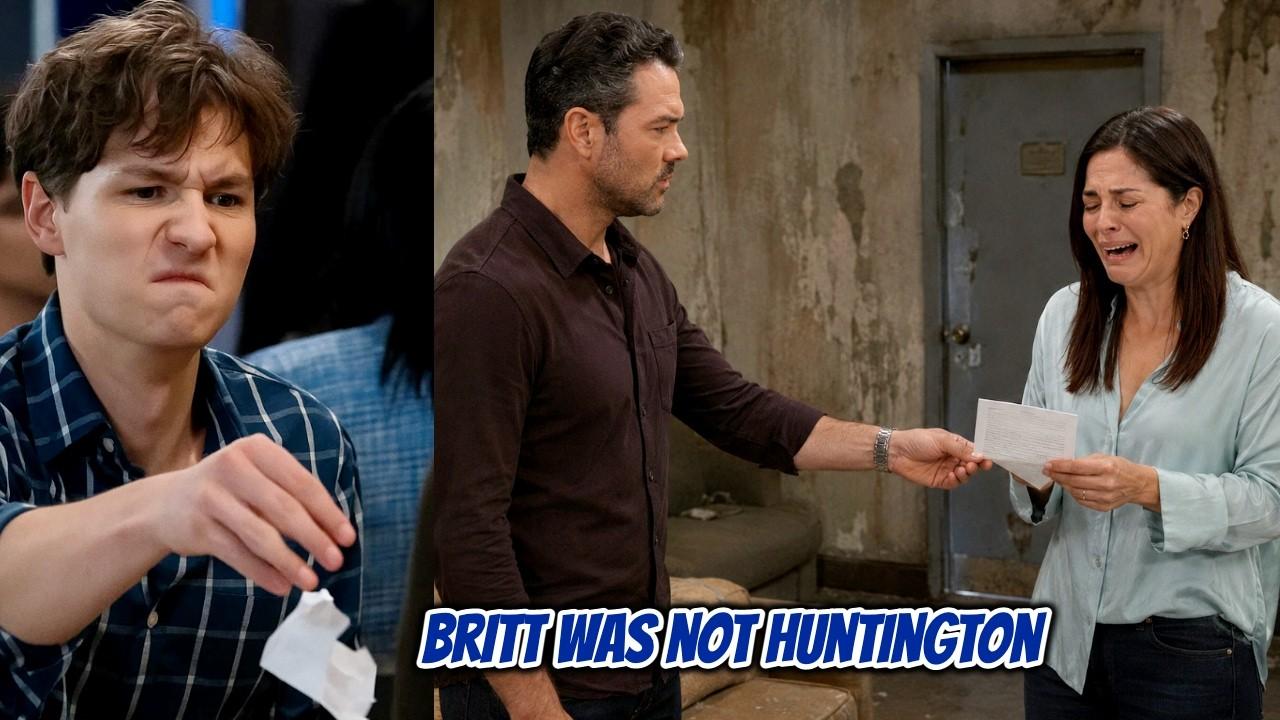
However, in a twist that has sent shockwaves through the Port Charles community, a groundbreaking report from Cassius has rewritten Britt’s narrative entirely. The news, delivered with the gravity it deserves, has shattered the prevailing assumption of Huntington’s disease. This revelation doesn’t just offer Britt a reprieve; it catapults her back into a position of strength and possibility, forcing everyone to re-evaluate their perceptions and the emotional outpouring of the past months.

The implications of Cassius’s report are monumental. It means that the agonizing fear, the sleepless nights, and the profound grief that Britt and those who care for her have endured were, at least in this instance, based on a misdiagnosis. This is not to diminish the very real suffering that Britt experienced. The emotional and psychological impact of believing one has a terminal illness is profound and cannot be easily erased. The scars of this perceived fate will undoubtedly linger, a testament to the immense mental fortitude Britt has demonstrated.
This turn of events brings a wave of relief, but it also introduces a new layer of complexity. How will Britt process this sudden lifting of a death sentence? Will she feel a sense of exhilaration, or a profound sense of disorientation and perhaps even guilt for the sympathy she has received? The process of re-acclimating to a life free from the shadow of Huntington’s disease will be a challenging one. Her perspective on life, on her relationships, and on her own mortality has been irrevocably altered by the months spent believing her time was limited.
Furthermore, the origin of the misdiagnosis now becomes a critical point of investigation. Who provided the initial diagnosis? Were there any deliberate manipulations or oversights that led to such a devastating error? The medical establishment in Port Charles, and by extension, the very trust placed in its practitioners, will be under scrutiny. This opens up new avenues for storytelling, potentially introducing new antagonists or revealing hidden agendas within the hospital’s walls. The precision and infallibility of medical diagnoses are paramount, and a misstep of this magnitude demands answers.
For the characters who have rallied around Britt, this news will bring a multitude of reactions. Liesl, whose maternal instincts have been in overdrive, will likely experience a profound sense of relief, perhaps followed by a renewed determination to protect Britt from any further harm. Jason, who has shown a growing protectiveness and a deep well of empathy for Britt, will undoubtedly be overjoyed, but also keenly aware of the emotional toll this has taken on her. The burgeoning romance between them, now unburdened by the specter of a tragic future, can potentially blossom with renewed hope and intensity.
The audience, having invested so heavily in Britt’s journey, will also be processing this seismic shift. The emotional rollercoaster of fear, sorrow, and now, immense relief, will leave a lasting impact. This narrative arc has underscored the resilience of the human spirit and the profound impact of a devastating diagnosis, even when it proves to be inaccurate.
In conclusion, Britt Westbourne’s story in Port Charles has taken a dramatic and unexpected turn. The shadow of Huntington’s disease has receded, thanks to a pivotal report from Cassius. While this offers a glimmer of hope and a chance for a brighter future, the emotional and psychological repercussions of her perceived fate will undoubtedly continue to shape her journey. The questions surrounding the misdiagnosis, and Britt’s personal journey of recovery and re-integration into a life free from this dread, promise to be some of the most compelling storylines to unfold in the coming months. Port Charles remains a city where fate can be rewritten, and Britt Westbourne is a testament to that enduring truth.