
Dylan’s Trauma Therapy Unlocks Disturbing Memories | Lethal Legacy | Casualty
**Holby City Hospital is no stranger to life-and-death struggles, but this week, the most harrowing battle is waged within the mind of one of its own.** In a devastating turn of events, Dr. Dylan Keogh, a man usually unflappable in the face of medical emergencies, finds himself confronting the suffocating grip of his own past. The latest installment of the BBC medical drama, “Casualty,” with the chilling episode title “Lethal Legacy,” plunges viewers into the deeply personal and profoundly disturbing journey of Dylan as he undertakes trauma therapy, only to unlock a Pandora’s Box of repressed memories that threaten to shatter his carefully constructed reality.
For years, Dylan has been a pillar of strength at Holby ED. His sharp intellect, unwavering dedication to his patients, and a dry wit that often belies a compassionate heart have made him a fan favorite. Yet, beneath the surface of professional competence, a darkness has been brewing. This week, that darkness is brought to the forefront as Dylan bravely, if reluctantly, embarks on a path to confront the trauma that has silently shaped him.
The genesis of this profound internal struggle lies in Dylan’s ongoing battle with his past, a battle he has largely fought in isolation. While his colleagues have witnessed fleeting moments of emotional turmoil, the true depth of his pain has remained a closely guarded secret. “Lethal Legacy” forces this secret out into the open, as Dylan’s therapist guides him through a series of exercises designed to unearth buried memories. The dialogue, stark and unsettling, reveals the fragile truce Dylan has maintained with his past. When asked about the earliest time he remembers needing alcohol, his initial deflection, “Define need,” speaks volumes. It’s a desperate attempt to intellectualize and distance himself from the raw, emotional truth.
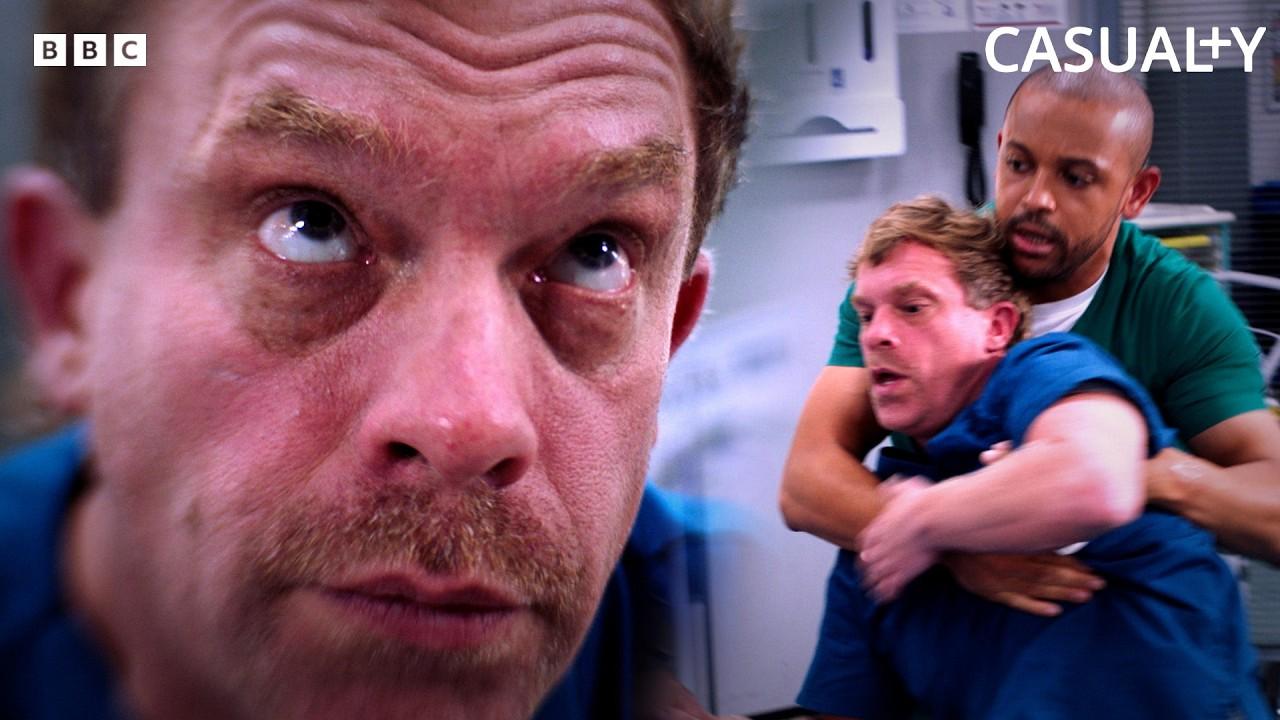
The therapy session, initially presented as a controlled environment, quickly devolves into a maelstrom of disquieting recollections. The subtle shift in Dylan’s demeanor, from a stoic facade to a man visibly struggling, is a masterclass in understated performance. The therapist’s gentle probing, “Have you noticed certain memories that come up when you think about alcohol?” elicits a reluctant affirmation. The question, “Where do you feel that memory?” is designed to connect the emotional to the physical, and it’s here that Dylan’s carefully constructed walls begin to crumble. His inability to articulate the location of his pain – “Huh? Um… I know. I… Uh. No, I don’t know” – underscores the profound disconnect he has cultivated with his own body and emotions.
The visual cues in these scenes are crucial. The flickering lights, meant to aid focus, instead become a source of discomfort for Dylan, mirroring the unsettling nature of the memories resurfacing. The therapist’s offer to stop, met with a quiet but firm refusal, highlights Dylan’s determination, however fraught, to see this through. He recognizes the discomfort, but he also understands, on some level, that this is a necessary reckoning.
The introduction of the “jelly baby” by the therapist is a poignant, almost jarring moment. It’s a small gesture of comfort, a familiar coping mechanism for Dylan, perhaps even a subconscious echo of past attempts to self-soothe. “Keeps your energy up. Keeps you happy,” he mutters, a flicker of his usual dry humor surfacing, but it’s a brittle humor, laced with an undeniable weariness. The therapist’s gentle acceptance, “Yeah, sure. Thanks,” acknowledges his reliance on these small comforts, while simultaneously recognizing the deeper issue at play.
“Lethal Legacy” doesn’t just focus on Dylan’s internal turmoil; it also explores the ripple effects of his struggles on his relationships. While specific plot points involving other characters are not detailed in the provided excerpt, it’s undeniable that Dylan’s emotional unraveling will impact his colleagues, his friends, and potentially even his romantic entanglements. The dynamics within Holby ED are often tested by personal crises, and Dylan’s raw vulnerability is set to become a significant factor in the hospital’s already complex social fabric.
The episode title, “Lethal Legacy,” is more than just a dramatic label; it’s a thematic cornerstone. It suggests that the trauma Dylan is confronting is not an isolated incident but a legacy passed down, perhaps through family, or through a series of devastating events that have left an indelible mark. The question of what this “lethal legacy” entails is the central mystery that the episode seeks to unravel. Are these memories connected to a specific traumatic event? A series of abuses? The impact of addiction on his family? The very nature of the memories themselves, described as “disturbing,” hints at something deeply disturbing and potentially dangerous.
The effectiveness of “Casualty” lies in its ability to portray the messy, often painful reality of human experience. Dylan’s journey is a testament to this. His struggle with alcohol and the resurfacing of suppressed memories are not presented as a mere plot device, but as a realistic exploration of the long-term consequences of untreated trauma. The show understands that healing is not linear, and that confronting the past can be a terrifying, disorienting process.

As Dylan grapples with these unearthed memories, the audience is left on the edge of their seats, desperate to understand the full extent of his suffering and the nature of the “lethal legacy” that has haunted him for so long. Will he find the strength to confront this darkness head-on? Can he rebuild the shattered pieces of his past to forge a healthier future? “Lethal Legacy” promises a raw, emotional, and ultimately, deeply compelling viewing experience, as it delves into the heart of one of Holby ED’s most beloved characters and the shadows that have followed him. The question remains: can Dylan survive the legacy he has inherited, or will it ultimately consume him? The answer lies in the unfolding drama, a testament to the enduring power of “Casualty” to explore the most profound aspects of the human condition.